Asian American Storytelling
Have you ever wondered what was here before Silicon Valley? Or who was here? Hear directly from community elders, activists, and historians as they bring these hidden histories to light in Storytellers of Santa Clara Valley: Asian American Oral Histories.
Storytellers of Santa Clara Valley: Asian American Oral Histories is an initiative of the Asian American and Asian Studies Department (ASAM) in partnership with the California History Center (CHC). It is part of a larger project, Asian American Storytelling in the Santa Clara Valley, funded by a National Endowment for the Humanities (NEH) grant, Voices of Silicon Valley: Using Heritage Discourse to Counteract Placelessness and Build Belonging.
This project was also supported by the Intercultural/International Studies (IIS) Division, home to ASAM and host of the annual Ethnic Studies Summit, and the Social Sciences and Humanities Division, which houses the CHC and oversees the administration of the NEH grant.
Visit the ASAM Website for more rich history and community education
Oral History Interview - Tom Izu and Susan Hayase
Interview Date: May 28, 2024
Narrators: Tom Izu, Susan Hayase
Interviewers: Mae Lee, Karen Wang
Tech Crew: Ed Breault, Lori Clinchard, Jiwon Jung
Tom Izu is the immediate past Executive Director of the California History Center (2001-2019) at De Anza College where for 24 years (1994 to 2019) he directed its work in promoting local, regional and state history, through publications, exhibits, oral history projects and courses, and the operation of a research library and archives. During his tenure with the center, he launched a civil liberties project inspired by the lessons learned from the World War II experience of Japanese Americans. He continues to serve its board as an advisor.
While a staff member of the college (1994 to 2001), Izu also served as a project director for the campus’ Asian American and Native American Pacific Islander-Serving Institutions (AANAPISI) US Department of Education grant funded program.
In addition, Izu has had extensive experience working in the San Jose Japanese American community, having served as the Executive Director of the Yu-Ai Kai Senior Center (1980s – early 1990s), and on the boards of numerous other Japantown community organizations. He was the first chairperson of the Nihonmachi Outreach Committee (1980), which was involved in the campaign for redress during the 1980s for the Japanese American WWII mass incarceration.
He currently serves on the Advisory Board of the Japanese American Museum of San Jose, helping to lead various grant funded projects with a special focus on public programming
that connects the community’s experience with other communities of color, especially
in regard to cultural and civil liberties concerns. One such project for which he
is a co-director is an augmented reality community art project, “The Hidden Histories of San Jose Japantown” (2020). It explores the stories of the Chinese, Japanese, and Filipino American
communities and their overlapping histories and connections in the
making of modern day Japantown.
His current activism includes being the co-founder of San Jose Nikkei Resisters, a grassroots, social change and advocacy organization for South Bay Japanese Americans, which is currently working on solidarity projects that include organizing Asian Americans to respond to anti-Asian harassment and violence as well as supporting the African American reparations movement. He also serves as a volunteer chapter leader for the Santa Clara Valley Chapter of the ACLU of Northern California.
Susan Hayase is a founding member of nationwide redress organization as representative of NOC which functioned as the San Jose Chapter of National Coalition for Redress/Reparations (NCRR). She was appointed by President Clinton to serve as Vice-Chair of the Civil Liberties Public Education Fund. She worked as an engineer in Silicon Valley (1980s). She is a co-founder of San Jose Nikkei Resisters (2018) and co-director of Hidden Histories of San Jose Japantown (2020).
Hear more from Susan: Susan Hayase Interview September 12, 1997 - Densho Digital Repository (44:46)
Hidden Histories Japantown is a grant funded grassroots community art project co-directed by Tom Izu and Susan Hayase. It features augmented reality artworks linked to spaces of importance in the San Jose Japantown area. Learn more about Hidden Histories at hiddenhistoriesjtown.org.
Oral History Interview - Connie Young Yu
Interview Date: June 11, 2024
Narrator: Connie Young Yu
Interviewers: Mae Lee, Karen Wang
Tech Crew: Jiwon Jung, Karen Wang, Lori Clinchard, Ed Breault
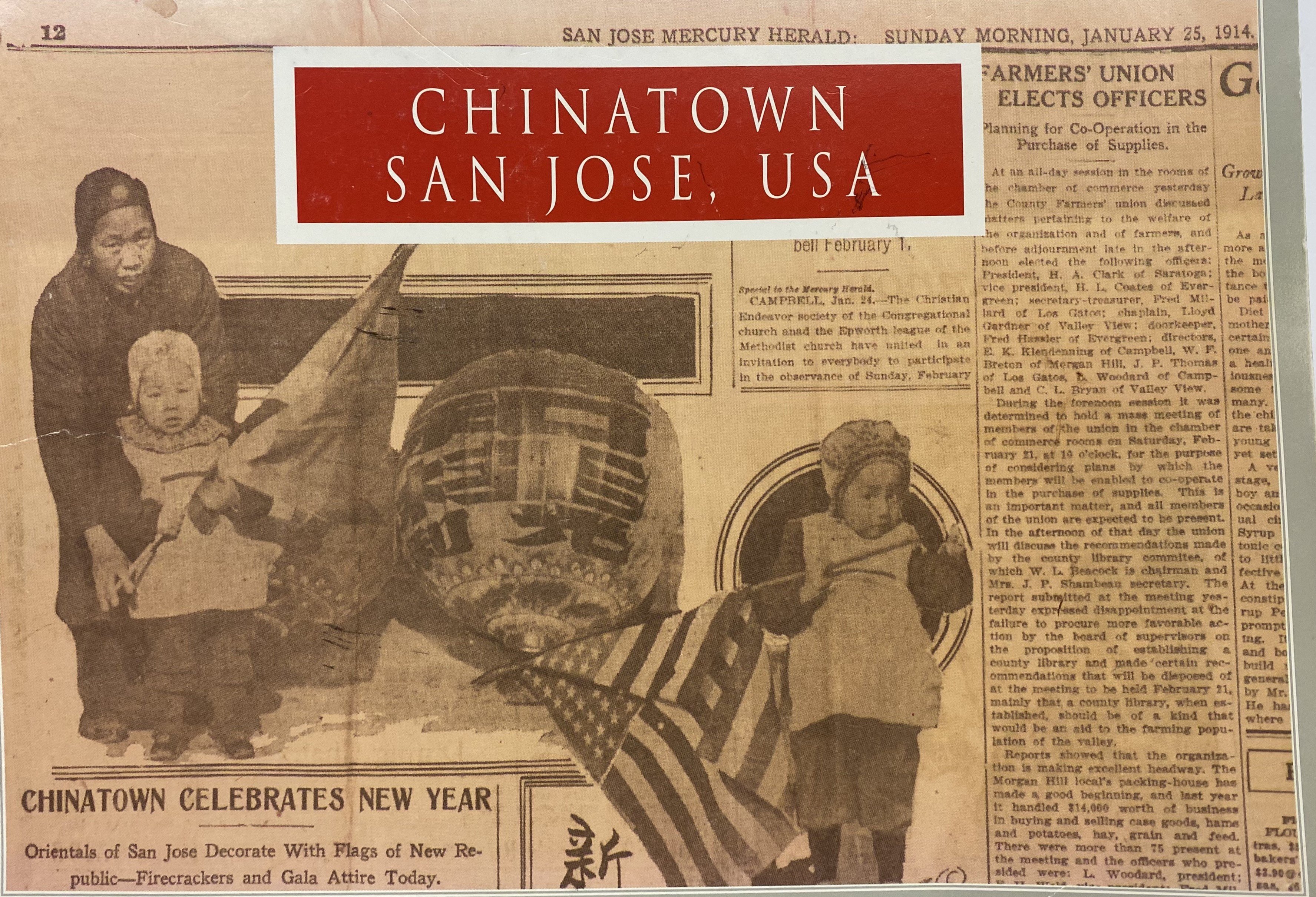
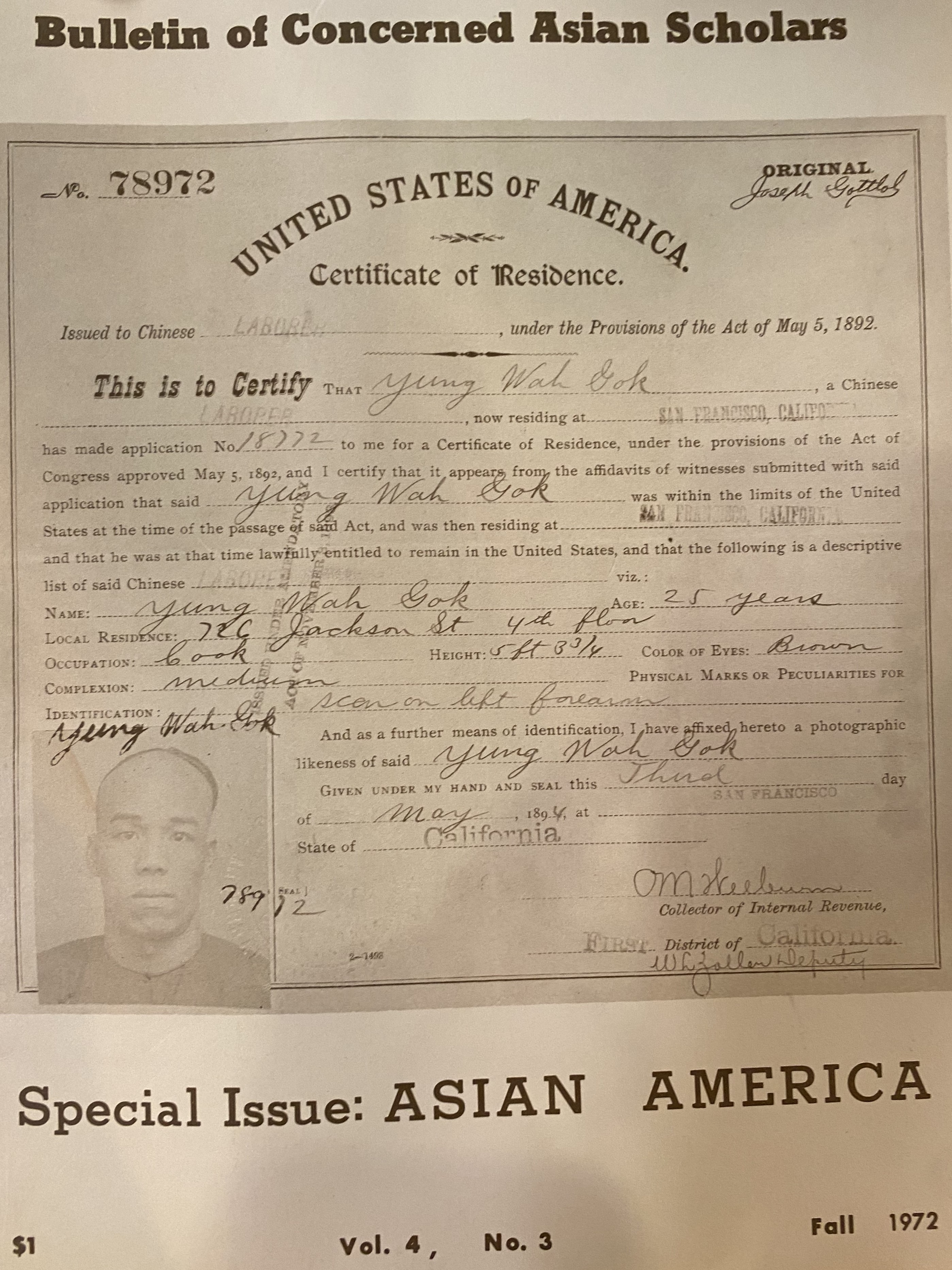
Connie Young Yu is a 4th generation Chinese American. Her great-grandfather on her mother's side came to America in the 1860s as a railroad worker. Her grandfather on her mother's side was born in the US and worked for Levi Strauss. Her mother was educated in China. Her grandfather on her father's side came to San Jose in the 1880s as a farm worker, and later became a merchant in Heinlenville. Young Yu's brother, Alfred John Young, was a World Champion race car driver.
Connie Young Yu was born in 1941 in LA, and grew up in Whittier (Southern CA) and SF Chinatown. She studied literature and journalism at Mills College.
Young Yu became involved in peace activism. She organized demonstations against the Vietnam War, encountered Asian American radicals including Gordon Chang, and was part of a radical underground radio station. She is a writer of "untold stories" of the Chinese American experience. She is a prominent historian of Chinese railroad workers.
She is a founding member of Asian Americans for Community Involvement (AACI), and has served on media and textbook committees. She has been operations manager for a mental health study of Southeast Asian refugees. She has given a keynote and presentation on SJ Chinatowns at “Rural Chinatowns” conference in Salt Lake City, Utah.
Young Yu's father was a prominent leader and businessman in SF Chinatown and was an original board member of the Chinese Historical Society of America (CHSA). CHSA is the oldest and largest Chinese American history archie in the United States. One of their main goals was to achieve posthumous recognition of the contributions of Chinese railroad workers.
Young Yu participated in AAPI Perspectives, an oral histories and ethnic studies curriculum project done in collaboration between SJSU and JAMSJ (completed in 2024).
Oral History Interview - Robert Ragsac
Interview Date: June 18, 2024
Narrator: Robert Ragsac
Interviewers: Mae Lee, Karen Wang
Tech Crew: Jiwon Jung, Lori Clinchard, Ed Breault
Robert Ragsac's parents immigrated from the Philippines and worked as agricultural workers in Hawaii, then California. Ragsac was born in 1931 and grew up in what is now known as San Jose Japantown.
He earned a BA in Engineering and Math at San Jose State University, and an MA scholarship to study aerospace engineering at Caltech. He worked in the aerospace and defense industry (rocketdyne, Lochkeed Martin). After getting laid off due to an economic downturn, he started working in law enforcement and criminal justice.
In the 1970s, Ragsac worked with an organization called the Filipino Young Adults to help the Filipino community in Santa Clara County with social services and counseling. Beginning in late 2006, he worked with Curt Fukuda and Ralph Pearce on their book “San Jose Japantown: A Journey” (published 2014). This later blossomed into the “Pinoytown tours” which started in spring of 2019. Ragsac has been a member of Filipino American National Historical Society Museum Board of Directors. Ragsac paticipated in AAPI Perspectives, an oral histories and ethnic studies curriculum project done in collaboration between SJSU and JAMSJ, completed in 2024.
A First Generation Fil-Am Looks Back - From Life's Ilokano Side by Robert Vidal Ragsac Sr. 2008
This project has been funded through a National Endowment of the Humanities grant, "Voices of Silicon Valley", to California History Center at De Anza College. Any views, findings, conclusions, or recommendations expressed in this {article, book, exhibition, film, program, database, report, Web resource}, do not necessarily represent those of the NEH.